
How Teachers Help Shy or Anxious Children in Preschool Thrive Confidently
It’s completely natural for parents to worry about how shy or anxious children in preschool will adjust to a new environment. Parents often wonder, will my child make friends? Will they feel safe? Will they speak up? These feelings are common—especially when preschool is a child’s first experience in a group learning setting.
The good news is that preschool is not designed only for outgoing children. High-quality early learning programs are intentionally structured to support shy or anxious children in preschool, helping them grow in confidence, emotional security, and independence at their own pace.
Shyness and Anxiety Are Normal in Early Childhood
Shyness and anxiety are very common during early childhood development. Young children are still learning how to manage emotions, navigate new environments, and understand social expectations.
For shy or anxious children in preschool, these stages may look like quiet observation, hesitation to join group activities, difficulty separating from parents, or resistance to transitions. These behaviors are developmentally appropriate and are not signs that a child is struggling long-term.
Preschool teachers are trained to recognize these signals as communication—not misbehavior—and to respond with patience and understanding.
According to the American Academy of Pediatrics, social and emotional development varies widely in early childhood, and anxiety during new experiences is developmentally appropriate.
Creating a Safe and Predictable Preschool Environment
Teachers support shy or anxious children in preschool by creating a consistent and predictable environment, which is one of the most important ways to do so. Clear routines help children understand what to expect, reducing anxiety caused by uncertainty.
Daily schedules, familiar songs, repeated activities, and clear classroom expectations help children feel secure. When children know what comes next, their stress levels decrease, allowing confidence and curiosity to grow naturally.
Predictable routines and nurturing classroom environments are core to our approach, which you can learn more about on our main page.
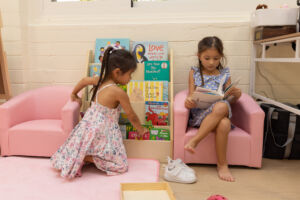
Building Trust Comes Before Social Pressure
For shy or anxious children in preschool, trust is the foundation of all progress. Teachers focus on building strong, nurturing relationships before encouraging social interaction.
Through warmth, reassurance, and emotional availability, teachers create a safe space where children feel understood. A child who trusts their teacher is more likely to explore, participate, and eventually engage with peers.
This trust-building approach allows children to develop confidence without feeling rushed or overwhelmed.
Gentle Encouragement Instead of Forcing Participation
Preschool teachers understand that confidence cannot be forced. Instead of pushing shy or anxious children in preschool to speak up or participate immediately, teachers use gentle encouragement strategies.
These include:
-
Offering choices instead of demands
-
Allowing children to observe activities before joining
-
Encouraging participation in small, manageable steps
-
Celebrating progress, no matter how small
By focusing on gradual success, children build confidence in a way that feels safe and empowering.
Supporting Social Connections in Low-Pressure Ways
Teachers help shy or anxious children in preschool form social connections naturally. Small group activities, partner play, and guided interactions allow children to practice social skills without the pressure of large group settings.
Rather than expecting instant friendships, teachers focus on helping children feel comfortable being part of the group. Over time, these low-pressure experiences help children develop meaningful peer relationships.
Teaching Emotional Language and Self-Regulation
Many anxious behaviors stem from children not yet having the words to express how they feel. Preschool teachers model emotional language to help shy or anxious children in preschool identify and name their emotions.
By hearing phrases like “It’s okay to feel nervous” or “I see you’re feeling unsure,” children learn that emotions are normal and manageable. This emotional awareness gives children tools to self-regulate and communicate more effectively.
Partnering With Parents for Consistent Support
Supporting shy or anxious children in preschool works best when teachers and parents partner together. Open communication allows teachers to share observations, celebrate progress, and align strategies between home and school.
When children experience consistent emotional support in both environments, they feel more secure and confident navigating new situations.
Confidence Grows With Time
Preschool is not about changing a child’s personality—it’s about helping shy or anxious children in preschool feel safe being themselves. With patience, empathy, and structure, children often make remarkable social and emotional progress.
Many families are surprised by how much their child grows in confidence, independence, and communication over time.
At Early Achievers Preschool Hawaiʻi, teachers understand that every child develops differently. By honoring each child’s pace and emotional needs, they create a nurturing environment where all children can thrive.
If you’re concerned about how your child may adjust, learn more about our supportive preschool approach today.
At Early Achievers Preschool we cultivate young minds
Enroll your child with us and witness them flourish in a nurturing, achievement-driven atmosphere!